Salesforce AIforce World Tour: Agentic AI for B2B Marketing

Length 4 min read
Date October 27, 2026
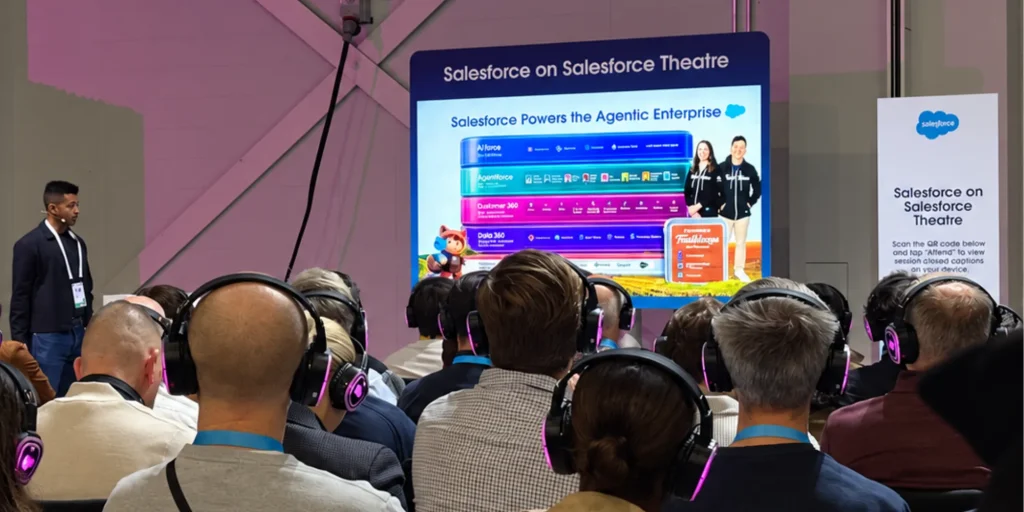
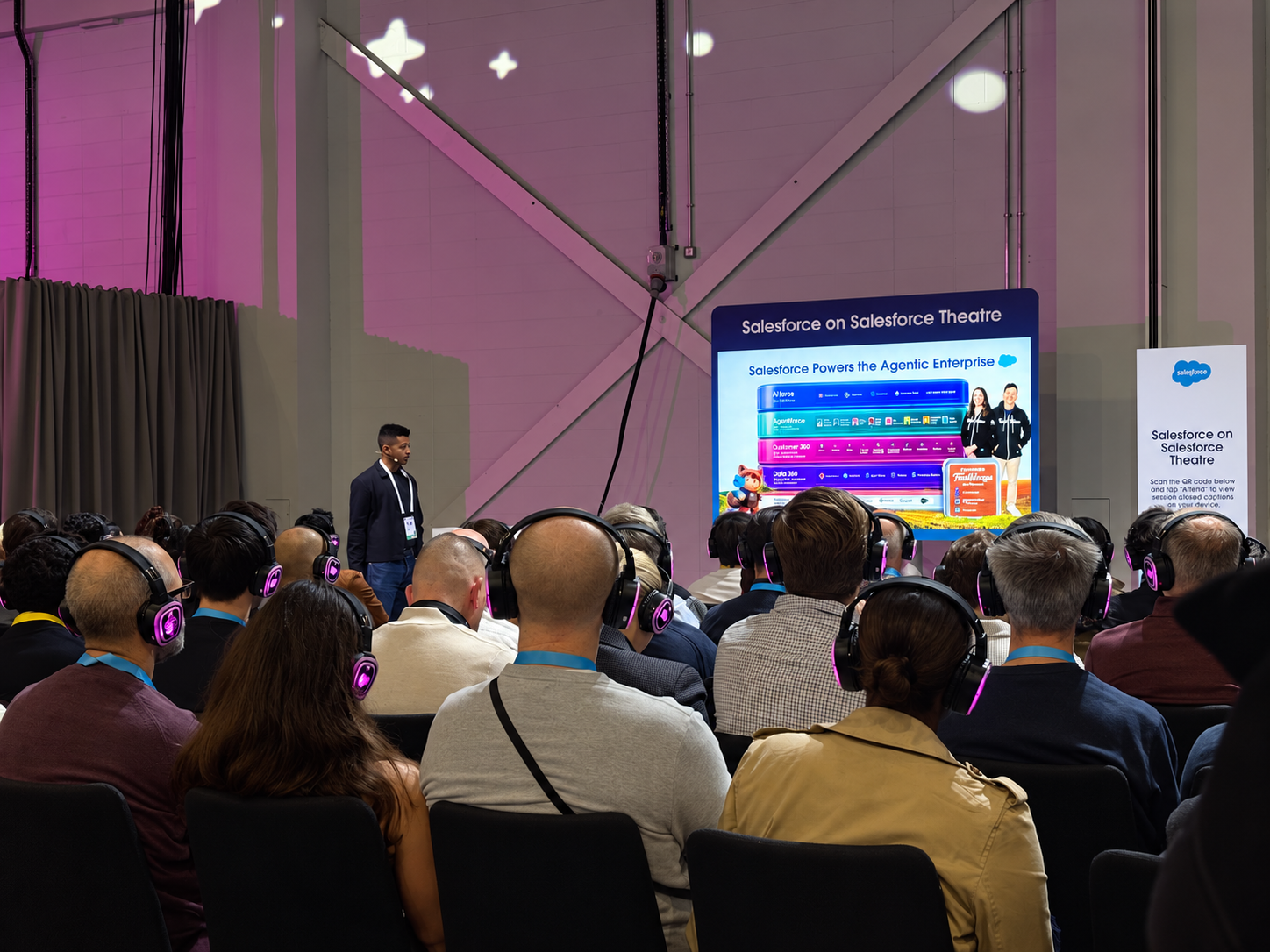
On 15th October, Paul, Kathryn, Lily and I headed to London for Salesforce AIforce World Tour, where agentic AI, connected data and their impact on marketing and business operations were high on the agenda.
As someone who spends a lot of time helping marketing teams get the most from their Salesforce martech, I was keen to explore how these new capabilities could translate into everyday marketing operations.
Across the sessions, one thing became clear: AI is moving beyond individual tasks to support entire workflows. So, what does that mean for B2B marketers, and where should organisations focus their attention?
From AI Experimentation to Agentic Marketing
One of the standout sessions for me was The Future of B2B Marketing Is Agentic, which explored how AI is evolving from individual tasks to more connected, agent-led workflows.
While generative AI can help marketers draft emails or summarise information, AI agents can go further, working towards defined goals and supporting activities such as audience research, content preparation and campaign planning.
For anyone working with marketing automation platforms such as Marketing Cloud Account Engagement (Pardot) or Marketing Cloud Advanced, the potential is clear. We already rely on automation to manage nurture journeys and campaign activity, but these processes often involve manual preparation and decisions between stages. AI agents could help bridge some of those gaps, giving marketers more time to focus on strategy and customer engagement.
Traditional automation still has an important role, particularly for predictable, repeatable tasks. The opportunity is understanding where AI can add flexibility to existing workflows and how the two can work together.
Agentforce Help Agent: Putting AI into Practice
Another highlight was the Agentforce Help Agent session, where we got hands-on with configuring an AI-powered help agent for a website, help portal or voice channel.
The session demonstrated how an agent could answer common customer questions, guide users towards relevant information and recognise when human support is needed.
What stood out was the importance of getting the configuration right. An agent needs reliable knowledge sources, clear instructions and appropriate permissions to provide useful responses. Without those foundations, even the most advanced AI capabilities will struggle to deliver a good customer experience.
For organisations exploring Agentforce, I’d recommend starting with a focused use case, testing how the agent responds to different scenarios and building from there.
AI Beyond Marketing: Connecting the Wider Business
AIforce also demonstrated how these capabilities are being applied across other business functions.
How Salesforce Empowers Its Sellers with Claudeforce explored how Claude can support sales teams within their existing workflows, while Hey AI, Meet the #1 CRM looked at AI’s role within the wider Salesforce ecosystem.
For marketing leaders, there’s an important connection here. Marketing doesn’t operate in isolation. Campaign engagement, sales conversations and customer interactions all contribute to our understanding of the buyer journey. Connected data helps teams build a clearer picture of their customers.
Another session, Build AI-Ready Brand Experiences with Contentful & Palmata, explored how structured, well-managed content supports AI-powered digital experiences. AI alone won’t solve disconnected processes or poorly organised content. The information and systems behind these experiences matter just as much.
Data 360: Why Your Data Foundations Matter
AI agents need accurate, accessible information to make useful decisions and take appropriate actions. For marketers, this makes the quality of customer data more important than ever.
Think about the segmentation and personalisation we already manage in marketing automation platforms. Incomplete records, outdated information and disconnected systems can limit what our technology can achieve. Agentic AI faces the same challenges, potentially on a much larger scale.
Salesforce Data 360 highlights the importance of connecting customer information and making it available across applications and workflows.
For organisations considering AI adoption, I’d encourage looking at the data foundations first. Where does your customer information live? How reliable is it? Can your platforms access what they need?
The Human Side of AI Adoption
One of the most relevant sessions was Beyond the Use Case: The Human Side of AI Adoption.
It’s easy to get caught up in what new technology can do. But introducing AI also changes how people work, the skills they need and how responsibilities are managed. This really resonated with me from a training perspective.
Giving people access to AI is only the beginning. They need to understand how it works, where it can help and how to use it confidently.
For marketers, AI could reduce time spent on repetitive tasks and create more space for planning, creativity and customer engagement. But people still need to guide the strategy, evaluate the output and make decisions based on their understanding of the customer. That’s why training and enablement will be so important.
Turning AI Potential into Practice
I came away from AIforce excited about the possibilities for B2B marketing, particularly how AI agents could support campaign delivery, help teams respond to customer signals and reduce manual effort.
For marketing leaders, the priority is identifying where AI can deliver value and putting the right foundations in place. For marketing teams, it’s about understanding how these capabilities can improve everyday processes.
Organisations don’t need to change everything overnight. Start with a clear use case, get your data and processes in good shape, and make sure your teams have the knowledge and confidence to use the technology.
If you’re exploring how to make AI work for your marketing team, take a look at Clevertouch’s AI Enablement services to see how we can help you identify valuable use cases, build confidence and put AI into practice.
Agentic AI is opening up some exciting opportunities, and I’m looking forward to seeing how these capabilities develop across the Salesforce ecosystem.